How is good cholesterol made?
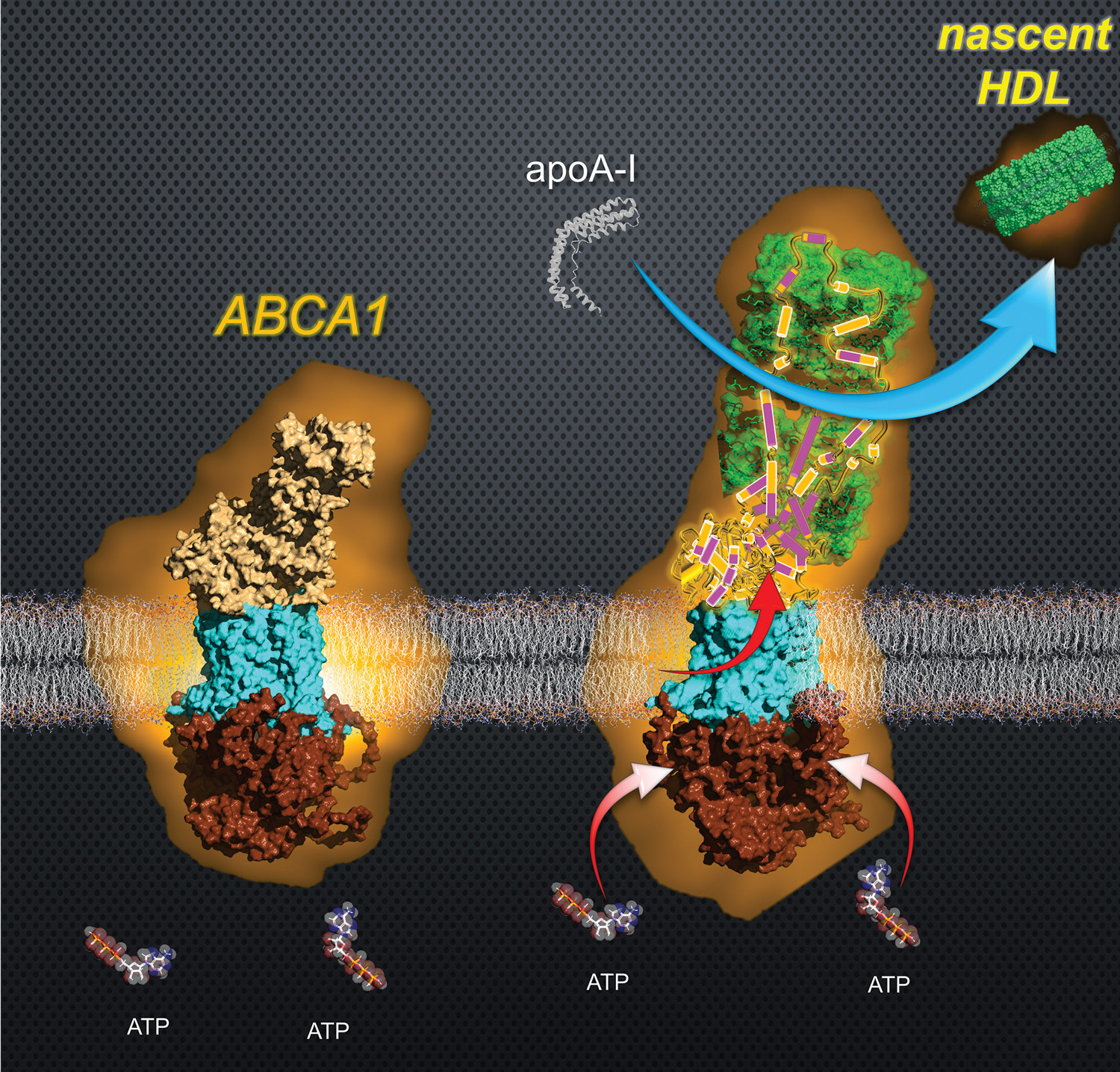
High-Density Lipoproteins (HDL), also known as “good cholesterol”, remove excess cholesterol from the body’s tissues and transport it to the liver. This process is known to prevent atherosclerosis, the build-up of plaque in the walls of arteries. Atherosclerosis is associated with deadly symptoms, including heart attacks, strokes, aneurysms, and blood clots. Despite the importance of HDLs, scientists still have a limited understanding of how they are made.
“It was historically believed that HDLs pull out excess cholesterol from cells through passive diffusion.,” explains lead researcher Professor Kazumitsu Ueda, a professor at Kyoto University’s Institute for Integrated Cell-Material Sciences (iCeMS). “However, in 1999, a genetic analysis of Tangier disease, a condition characterized by low levels of blood HDL, revealed that the ATP-binding cassette protein A1 (ABCA1), an ATP-dependent transporter, was essential for the HDL production. That only deepened the mystery - how were HDLs being made, and what exactly were they doing?”
Now, a team of researchers from the iCeMS have used a new imaging method to reveal the molecular mechanism through which HDLs are made. They showed how ABCA1 generates HDL molecules.
Paper Information
“Direct Visualization of ATP-Binding Cassette Protein A1 Mediated Nascent High-Density Lipoprotein Biogenesis by High-Speed Atomic Force Microscopy”
Authors: Atsushi Kodan, Romain Amyot, Kenichi Umeda, Fumihiko Ogasawara, Yasuhisa Kimura, Noriyuki Kodera and Kazumitsu Ueda