Susumu Kitagawa Wins 2025 Nobel Prize in Chemistry
iCeMS Distinguished Professor honored for his research on the chemistry of coordination space

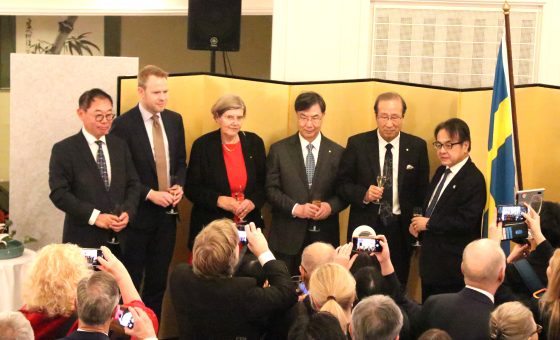
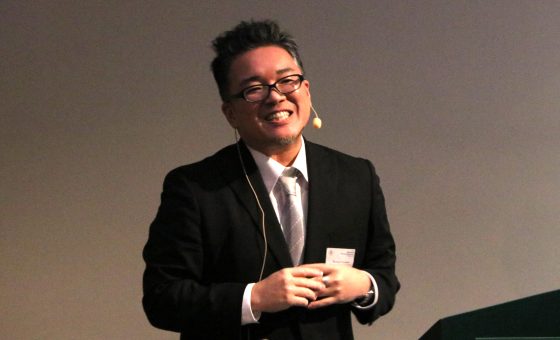
Today, October 8, Prof Susumu Kitagawa, Distinguished Professor of Kyoto University’s iCeMS (Institute for Integrated Cell-Material Science), was awarded the 2025 Nobel Prize in Chemistry. Kitagawa was jointly awarded the prize along with Prof Richard Robson (University of Melbourne) and Prof Omar M Yaghi (University of California Berkeley) for "the development of metal-organic frameworks".
Kitagawa pioneered the field of the chemistry of coordination space when he began to study the spaces surrounded by the crystalline frameworks of porous coordination polymers. His ongoing work on porous coordination polymers (PCPs), also known as metal-organic frameworks (MOFs), continues to have a broad reaching impact in the field of chemistry. Since 1997, when he published his first paper showing that a PCP could reversibly adsorb and release gas, Kitagawa has been at the forefront of PCP research. PCP materials are increasingly seen as potentially game changing developments with diverse applications including energy storage, catalysis, carbon capture, gas purification and separation, water desalination and drug delivery systems.
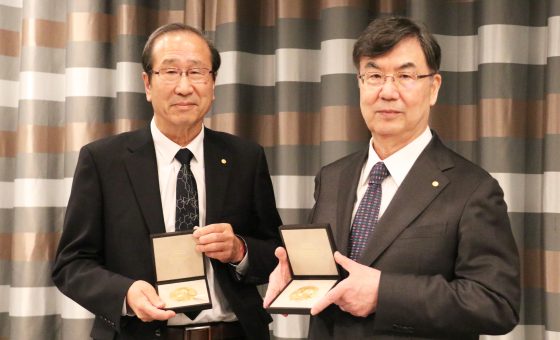
The Nobel Prize was established by the will of Alfred Nobel whose numerous inventions relied heavily on his knowledge of chemistry. Since 1901, the awards have been given to “those who, during the preceding year, have conferred the greatest benefit to humankind.” The prize in chemistry is awarded by the Royal Swedish Academy of Sciences. Winners receive a Nobel Prize medal, diploma, and a monetary reward equal to 10 million Swedish krona.
Kitagawa joins a prestigious group of Kyoto University alumni and professors who have been awarded the Nobel Prize. The Nobel Prize in Chemistry has gone to three other alumni: Akira Yoshina (2019), Ryoji Noyori (2001), and Kenichi Fukui (1981) a longtime professor at the university (1951-1982) who was teaching at the time Kitagawa was a student.
Kyoto University’s Institute for Integrated Cell-Material Biology (iCeMS) was founded in 2007 as one of the five original World Premier International Research Center Initiative (WPI) institutes under an initiative of the Ministry of Education, Culture, Sports, Science and Technology (MEXT). The WPI mission is to create world-class, interdisciplinary research centers that revolutionize conventional modes of research operation and administration in Japan. iCeMS continues to transcend the boundaries between cell biology and materials science, exploring the intersection of life and matter, and pioneering a new field of research – integrated cell-materials science.
Related links
Related Video
Announcement of the 2025 Nobel Prize in Chemistry